
Frisky RSS Frisky on Google

HIV

Items tagged HIV:

 1 2 >

Meet Kami, The First HIV-Positive Sesame Streeter

AP

Even though the days are sunny and the air is sweet, things aren’t always perfect on “Sesame Street” … especially in South Africa. There is a new kid on the block there and she’s teaching her neighbors about some of the tough realities of life. Meet Kami (short for the Setswana word “Kamogelo” which means “acceptance”), the 5-year-old, HIV-positive muppet. The cute, yellow girl showed up on “Takalani Sesame” (that’s what it’s called in South Africa) a nervous orphan, afraid that she wouldn’t be accepted because of her disease—but, of course, her neighbors embraced her. And so has the rest of the country. Kami has become a role model in South Africa, providing hope for 28,000 HIV-positive children and 1.4 million orphans and teaching others about the challenges of living with HIV/AIDS. She has even been named a UNICEF ambassador for children. So will Kami be visiting the American “Sesame Street” anytime soon? Not a chance.

Comments (6)
Bookmark and Share

What’s The #1 Cause Of Death Of Women Around The Globe?

HIV kills women

Ask an American to name the leading cause of death for child-bearing women across the globe and I reckon he or she might say “heart disease,” “breast cancer” or maybe even car accidents. After all, those are some of the greatest killers for American women, ones we are warned to be aware of day-in and day-out.

But the World Health Organization just released the results from its first-ever study of women’s health around the world and the results are telling. HIV/AIDS, actually, is the #1 cause of death or disease for women between the ages 15 and 44 across the globe. Not surprisingly, unprotected sex from lack of access to contraceptives is one of the leading risk factors, warned the W.H.O. How sad: a disease most American women would never expect to die from is actually the leading cause of death for everyone else. [The New York Times]

Comments (0)
Bookmark and Share

Evil Insurance Companies Are Dropping Coverage For Women Who’ve Been Raped

Last week, the Huffington Post made our blood boil when they reported on a horrifying trend—that insurance companies are denying benefits for women who’ve been raped, and even dropping their coverage altogether. How can they get away with such a thing? Because, when a woman is raped and it’s unknown whether the assailant used a condom, doctors typically prescribe a month’s worth of an anti-HIV medication (which, uh, I didn’t even know existed) as a precaution. It’s extremely rare that a woman actually contracts HIV this way, but insurance companies view this as a morbid done deal. Susan Pisano, a spokeswoman for the health insurance industry’s largest trade group, America’s Health Insurance Plans, explains, “If you put down on a form that you are or were taking anti-HIV drugs at any time, [insurance companies] are going to understand that you are or were in treatment for HIV, period. That could be a factor in determining whether you get coverage.”

Comments (20)
Bookmark and Share

These 5 Women Were Given HIV By The Same Man

Today’s episode of “Oprah” was both upsetting and inspiring. The five women in the clip above all contracted HIV from the same man—their boyfriend, Philippe Padieu, who was secretly wooing (and sleeping with) all of them (and then some!) at the same time. He knew he had HIV, yet didn’t tell any of them. Little did he know what they would do when they found out. The women banded together to warn others being seduced by Padieu’s charms and then went to the police. He was eventually sentenced to 45 years in prison. Kick. Ass. [Oprah]

Comments (27)
Bookmark and Share

New HIV Awareness Campaign Hits Home

One Life HIV Awareness Campaign

This new AIDS Awareness campaign from One Life finally uses sex to sell an effective message—when you sleep with him, you’re sleeping with everyone in his past. Click on over to Trendhunter to see a few more graphic images—including a woman giving a blowjob to a handgun. One more image, after the jump…

Comments (14)
Bookmark and Share

Nigeria Wants HIV-Positive Folks To Marry Each Other

HIV Marriages Are Encouraged In Nigeria

In Nigeria, a government program is trying to stop the spread of AIDS by ... encouraging HIV-positive people to marry each other. The idea is that if they’re married, they won’t be as likely to spread the disease to others. And they’re giving serious incentives for tying the knot. In exchange for an “HIV-marriage,” the agency will pay a couple’s dowry, and even provide them with counseling and employment assistance. There is no actual evidence that these marriages reduce the spread of AIDS, but some couples do note serious benefits of marrying another person with HIV. Some have said that their marriage has provided them with a support group and reduced the stigmatization associated with this disease.

Comments (1)
Bookmark and Share

Sweet! Scientists Decode The HIV Genome

HIV Genome Decoded

For the first time ever, researchers have decoded the complete HIV virus genome. This wasn’t an easy feat, because HIV carries its genetic information on RNA instead of DNA which is more complex because it’s 3D. This is a very big deal because now scientists will have a much better understanding of how HIV works. They can zoom in on different pieces of the virus and see which parts do what. Researchers can, hopefully, use this info to figure out why the virus is able to go undetected in the human host for so long and why it’s immune to so many drugs. Scientists also plan to alter or mutate parts of the genome and see if the virus notices. If they can find a mutation that effs up how HIV functions or makes it grow slower, well, that’s pretty exciting. [AFP]

Comments (1)
Bookmark and Share

2010 World Cup Could Result In An Increase In HIV

HIV/AIDS cases could increase in South Africa due to World Cup

As South Africa prepares to host the 2010 FIFA World Cup, the country is getting some attention for some not-so-positive news. Along with a high number of rapes, the country has long struggled to keep HIV/AIDS in check. With tourists pouring in for the huge soccer competition next June, the health minister, Aaron Motsoaledi, expressed concerns that the influx could lead to an increase in cases:

“2010 is going to come with good things but it may also come with dangerous things….I mean, we will be having lots of visitors here… we know there will be lots of visitors who come here for sex, you can’t hide that. It happens and what will be the effects on this country?”

South Africa is home to the world’s largest AIDS epidemic, with about 5.7 million people infected with HIV. Hosting the World Cup is huge for South Africa and could be very beneficial. Hopefully, tourists visiting the country will practice safe sex if watching soccer isn’t enough activity for them; no one wants to take home a virus as their souvenir. [Reuters]

Comments (1)
Bookmark and Share

Oh No! A New HIV Strain Has Been Discovered

New Strain of HIV

While treating a 62-year-old Cameroonian woman in Paris, scientists discovered a new strain of HIV. This strain is from gorillas, not chimpanzees, and cannot be detected by conventional HIV tests. Scientists suspect the woman caught the virus from another human, not by eating infected meat. But, since it doesn’t show up in conventional tests, the virus could be “cryptically spreading in the population.” All of this is pretty scary, but scientists don’t seem too concerned. They say the new disease can still be treated with the same drugs and they’re pretty sure that if a vaccine is invented, it will work for this strain, too. Unfortunately, the effects are probably still the same no matter which strain people contract. We just hope they figure out how to test for it. Fast. Very, very fast. [BBC]

Comments (1)
Bookmark and Share

HIV Positive Travelers Finally Allowed To Visit The United States

For the past 22 years, the U.S has banned HIV-positive visitors from entering our illustrious and diverse country. Other progressive lands with such rules: Iraq, Saudia Arabia, China, Libya, and the Sudan. But the government has finally lifted the ban and surprisingly, it was George W. Bush who signed the bill that put the repeal into action last summer. But because HIV was still on a list of communicable diseases restricting travel, people were still being kept out of the country and their only option was to apply for a waiver that cost $545 and didn’t guarantee admission anyway. The Department of Health and Human Services made the final steps on July 2nd to officially get rid of this policy altogether.

I’m still confused—did tourists have to get blood work before coming to America? It’s not like sneeze germs pass HIV and, I mean, Americans should know better than to sleep with tourists anyway. (Just kidding!) If I was foreign and HIV positive, I would totally want to go to Graceland for Dippin’ Dots, so thank God the government’s finally done something about this. [Med Page Today]

Comments (3)
Bookmark and Share

Lady Gaga Dislikes Pants But Supports The Wearing Of Rubbers

Lady Gaga Mural

Earlier this week, Lady Gaga took time out from pantslessness and boob explosions to volunteer at AIDS charity Body Positive North West in Manchester, England. “I want to make it fashionable to have safe sex,” she said. “You must be safe. You can have sex with hundreds of people with a condom on and get nothing. If you have sex without one, then you could get all sorts of problems.” Hey, if the singer can create a trend out of neglecting to put clothes on the lower half of her body, maybe she can get people to put on condoms.

While she was at the AIDS center, she helped paint the above mural that included her likeness. The hair-bow is accurate, but why is she wearing leggings? [The Advocate]

Comments (0)
Bookmark and Share

Condoms Are A Rarity In U.S. Prisons

condoms in prison

The Los Angeles County Sheriff is considering expanding a program that distributes condoms in a unit for gay men at Men’s Central Jail. Currently, an outreach worker from nonprofit Center for Health Justice stops by once a week to give one condom per inmate to the 300 men in that unit. Now they’re considering doubling the number of condoms being distributed. Sheriff Department officials say they spend about $2 million annually on HIV/AIDS medication and identify 65 new cases of HIV each month. “Sex in jails is against the law, but there is a public health issue that needs to be considered,” said spokesperson Steve Whitmore.

Comments (2)
Bookmark and Share

If You Are HIV Positive, You Probably Live Here

HIV/AIDS map

Of course, sexual health educators should still teach everyone to protect themselves against HIV/AIDS. But researchers have created an interactive online “HIV/AIDS Atlas,” which shows how only one-fifth of America’s counties make up 80 percent of the cases. It’s sometimes hard to make public health topics “interesting” and “cool,” but a map does a good job of it!

Comments (0)
Bookmark and Share

Chinese Sex Workers Told A Shot Will Protect Them From HIV

Okay, so I know pimps usually aren’t the nicest of guys. But in China, where there are now more than four million young female sex workers, some are resorting to a nasty trick—they’re telling their prostitutes that they’re giving them a shot to protect them from HIV and other STDs. Obviously, no such shot exists—they want their women to be more open to sex sans condoms. As a result, sex has overtaken intravenous drug use as the number cause of HIV dissemination in China. Although the Chinese government is trying its best to educate sex workers, in such a large country with so many women, this is nearly an impossible task. All I can say is: evil.

Comments (4)
Bookmark and Share

Swaziland Introduces The “Love Test” To Fight AIDS

An estimated 26 percent of the population of Swaziland in Africa is HIV positive. But instead of instilling fear with grim AIDS campaigns, the Population Services International charity has introduced a new technique for raising awareness: The “love test.” (Check out the clip above.)


Comments (0)
Bookmark and Share

Past Sexual Partners Stay With You Like Unwanted Pubic Hair

MTV Pubic Hair Ads For Staying Alive HIV/AIDS Prevention Campaign

Check out this ad for MTV’s Staying Alive global HIV and AIDS prevention campaign. What better way to visually represent how people’s past sexual partners stay with them forever and become entangled than with name-shaped pubic hair! [Copyranter]

Comments (0)
Bookmark and Share

Branding HIV-Positive People?

Branded cow

Swaziland parliament member Timothy Myeni recently had a lightbulb zinger of an idea to solve his country’s HIV/AIDS problem. He wanted to brand all HIV-positive people on the butt(ox), so that people could physically check their partners to make sure they’re clean before getting down with them. We get that this idea was well-intentioned, but seriously? Branding people. Like cattle? Thank lordy Myeni came to his senses. At a news conference today, he said, “I’m very sorry. If you need me to show a sign of how sorry I am, I’m ready.”

Myeni, we forgive you. But, really, how did this ever sound like an idea people would actually get behind? (Behind, hehe.) Myeni, if you’re out there, next time you’re proposing an idea, why don’t you think about how you’d like to be on the receiving end of it. No one likes being the butt of a joke. Okay, I’ll stop now.

Comments (1)
Bookmark and Share

New Vaginal Ring May Prevent HIV Infection And Pregnancy

A New Vaginal Ring May Prevent HIV Infection And Pregnancy

Remembering to take birth control pills every day at the same time can be a hassle. Buying condoms adds another thing to our pages-long to-do list. Wouldn’t it be nice if there were an effective birth control and STD-preventative in one? Dr. Brij Saxena, a reproductive biology and endocrinology professor at the Weill Cornell Medical College, has developed a vaginal ring that may prevent sexually transmitted HIV and unintended pregnancy because it releases several types of non-hormonal agents and microbicides. The device has proven to prevent HIV infection in laboratory trials, Saxena said, and it could give women the power to protect themselves effectively and conveniently from an unintended pregnancy and HIV, if future clinical trials are successful.

Comments (6)
Bookmark and Share

We Could Wear A Tee Or Two From Designers Against AIDS

Designers Against AIDS

It takes a lot for us to be excited by clothes designed by celebs (we blame you, Jessica Simpson), but we could really get behind, not to mention inside, any one of these tees designed to raise money for HIV/AIDS prevention projects. H&M and Designers Against AIDS asked a bunch of celebs we love, like Dita Von Tees, Yoko Ono and Estelle, to create T-shirts for the second annual Fashion Against AIDS Collection. Twenty-five percent of the profits on each tee sold will go to charities that help curb the spread of HIV.

And, of course, you’ll spread the safe sex message by wearing one. Cyndi Lauper’s tee reads, “Girls Just Want To Have Safe Sex,” and Estelle’s says “Life Is Too Short—Have Safe Sex.” Even Yoko Ono chimed with an “Imagine Peace” tee, which doesn’t have anything to do with safe sex, really, but what the hell, she’s Yoko Ono. The tees go on sale in 1,000 stores at H&Ms in 30 countries and at DesignersAgainstAIDSShop.com on May 28. [Designers Against AIDS]

Comments (1)
Bookmark and Share

The Five Most Important Things You Should Know About: HIV

HIV virus

Human immunodeficiency virus (HIV) is the virus that causes AIDS in the later stages of the disease. The Centers for Disease Control and Prevention estimates that one million people in the United States are infected with HIV/AIDS, and about a quarter of those people don’t know they’re infected. Approximately 39.5 million people are infected with HIV worldwide. With those high numbers, it’s important that everyone knows how HIV spreads and how to avoid contracting the virus.

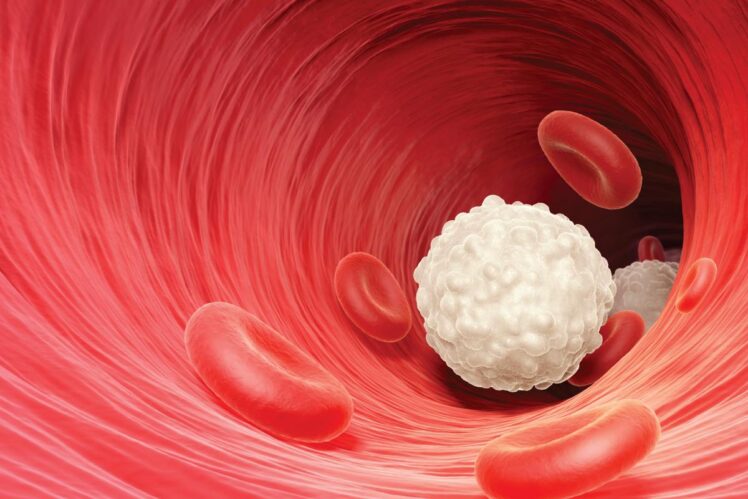
  1. HIV attacks the immune system by destroying white blood cells that fight off disease. Once HIV has weakened the immune system to the point where the body can’t fight off infection, the infection advances to its final stage: AIDS. It can take years for the body to arrive at this stage. People infected with HIV/AIDS usually die of other so-called “opportunistic” diseases and cancers that the body can no longer fight off.
  2. HIV lives in the blood and semen or vaginal fluid of the infected person. This is why the most common ways of transmitting HIV is through vaginal, oral, or anal intercourse. The second most common way of transmitting HIV is through the sharing of needles and syringes. Lastly, HIV can be transmitted from mother to child during pregnancy, childbirth, and breast-feeding. Because HIV is carried in the infected person’s blood, the virus can also be transmitted through blood transfusions, organ and tissue transplants, and shared needles. HIV is not transmitted through handshaking, hugging, contact with a toilet seat, touching a doorknob, or casual contact, and HIV cannot live outside the body for long.
Comments (3)
Bookmark and Share

 1 2 >

frisky chatter
frisky poll

frisky friends