

forgotten password | register

Brits Blame Promiscuity On Women’s Rights

British women A recent study found Britain to have more casual sex than any other Western nation. The study was conducted by…

Has The Business Of Making Babies Gone Too Far?

Pregnant woman In last weekend’s edition of the New York Times Magazine, Alex Kuczynski, the author of Beauty Junkies, writes about having…

Prostitution: To Legalize Or Not?

Comments (21)  E-Mail  | Share:  Add to Mixx!

Money inside a condom

After last week’s post about proposed legislation in San Francisco that would decriminalize prostitution and our poll that indicated that 73% of you not only supported decriminalization but legalization as well, we decided to take a more in-depth look at both. After the jump, we break down the differences and the pros and cons of both. There may be a soap box moment from yours truly as well.

DECRIMINALIZATION does not legalize sex-for-hire work, but it does instruct local police departments to treat these cases as a low priority, similar to the way in which marijuana laws are enforced in the State of California. Essentially, law enforcement looks the other way, allowing prostitutes to have the peace of mind to report crimes against them, or other crimes they’ve witnessed, without fear of arrest. In some decriminalization proposals, the money spent on enforcing prostitution laws is redirected to social service organizations.

  • Proponents of decriminalization say doing so gives sex workers rights they wouldn’t have otherwise (rights that are impossible to have when your workplace is “illegal") and offers prostitutes regular STD tests and pelvic exams, without fear of being turned in. When Berkeley, California, considered decriminalization a few years ago, Carol Leigh, a spokesperson for COYOTE (Call Off Your Old Tired Ethics), a San Francisco-based sex workers rights organization, said, “Generally, there is a distrust of the police among prostitutes. If you are raped, you don’t go to the police.” The theory is that decriminalization would make sex work safer--for sex workers.
  • Opponents of decriminalization say that it would increase crime and attract sex workers and johns from other areas where sex work is criminalized. As a result, law enforcement in these areas would be under an even greater burden. Additionally, opponents say decriminalization might as well be legalization, since the laws are not actually actively enforced.
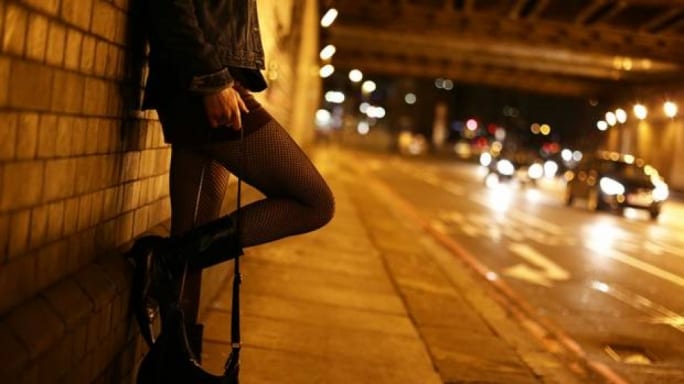
LEGALIZATION is what it sounds like. A few counties in Nevada have legalized prostitution--primarily, prostitutes work in brothels with managers or madams. The brothels pay taxes, are regulated by the local government, and are an integral part of the local economy. In addition, brothels require monthly blood tests of sex workers, so as to safeguard against the spread of HIV and other STDs.

  • Proponents of legalization ultimately believe that outlawing prostitution violates an individual’s civil liberties and one’s freedom to do what one chooses with one’s body. Like those in favor of legalizing drugs, proponents of legalization of sex-for-money argue that everyone benefits when sex work, which will go on regardless of legality, is monitored and regulated by the government. As a consequence, the spread of STD’s would lessen, as would violent crimes against sex workers. Proponents point to Nevada’s relatively successful bordello system as evidence legal prostitution can work.
  • Opponents of legalization believe prostitution contributes to high crime rates, rates that would only increase if prostitution were legalized. Many opponents believe sex work is amoral, a so-called profession that shouldn’t be on a par with CEOs or school teachers. Legalization, in opponents’ eyes, will lead to the downfall of American morality.

Since prostitutes must engage in sex work in a clandestine fashion, identifying the number of American women who engage in prostitution isn’t easy. Most calculations range between 230,000 and 350,000, but some estimates run as high as 1.3 million. Some women who go into prostitution do so out of desperation. Some women do so for reasons that have nothing to do with victimization.

When I was in college, I wrote an article for my school paper about sex workers. One of the women I interviewed, who worked in a Nevada brothel, came from an upper-middle-class family, was a graduate of a prestigious university, and became a prostitute because she liked sex and found the profession empowering. That’s not always the case for women who prostitute themselves, but the fact of the matter is that making sex work illegal has done nothing to deter men from soliciting or paying for sex.

The focus should be on keeping prostitutes safe, from abuse, assault, rape, and murder, as well as from sexually transmitted diseases. And if sex workers should be required to get regular blood and STD tests, so should the clients who see them. Whether these two protections--against violence and against disease--come about through decriminalization or legalization depend upon the letter of the law. Ultimately, I believe sex workers shouldn’t be treated like drug dealers, violent criminals, or pimps who exploit women for monetary gain.

Do you think prostitution should be decriminalized? Legalized? Should a woman have a right to sell her body for sex if that’s her choice? We want to hear your thoughts in the comments!


Tags: san francisco, prostitution, brothels, laws, sex for money, bordellos, sex work


Comments (21)  E-Mail  | Share:  Add to Mixx!
comments
LovesIt's avatar

LovesIt
wrote on July 30 2008 @ 11:34 am:

[report]

While logically it would make sense for clients also to be required to get regular tests for the safety of themselves and the prostitutes… how would this be enforced?  ID cards?  Registration in a database?  A doctor’s note?  I’m pretty sure not many Americans would be comfortable with any of those options in regards to their health history…

Regardless, you make some very strong points.  I support decriminalization totally.


Amelia's avatar

Amelia
wrote on July 30 2008 @ 11:49 am:

[report]

@LovesIt Strangely enough, we have a post coming up this afternoon about STD-free cards. So maybe those would work!


Alexa's avatar

Alexa
wrote on July 30 2008 @ 11:50 am:

[report]

I’d be curious to see what the polling of voters in San Francisco shows in terms of support for the measure.  I’d sure like to see it passed!  lol


Thierry Schaffauser's avatar

Thierry Schaffauser
wrote on July 30 2008 @ 01:10 pm:

[report]

I have been a sex worker for 6 years. I am currently living in London but I think the issue is quite the same everywhere. We need our rights recognized as workers to get equal protection from the state.
But if we legalize, it must be a legislation in favor of sex workers and not only bosses or clients.


Thierry Schaffauser's avatar

Thierry Schaffauser
wrote on July 30 2008 @ 01:21 pm:

[report]

The only thing is I dont get the point to oblige us to have medical tests. What does that mean ? HIV sex workers should be allowed to work too. Prevention means safe sex not poz people exclusion.
We are the best prevention actors and safe sex educators so why consider us as the problem of aids when we are the solution ?
I see that as the same double standard wich opposed Josephine Butler more than one century ago. We are not controled for our own protection but for mens’ one. It wouldnt be an improvement but a backlash.


Amelia's avatar

Amelia
wrote on July 30 2008 @ 01:30 pm:

[report]

@Thierry The point of the tests is really to make sure the sex worker AND the patron know about any diseases and can make informed decisions.


Thierry Schaffauser's avatar

Thierry Schaffauser
wrote on July 30 2008 @ 01:45 pm:

[report]

OK I am not against the tests in themselves but I am against the obligation and the lost of confidentiality because we are sex workers.
We are enough responsibles for ourselves and our clients to use condoms even if some of us can be HIV.

This kind of medical reglementation exist already in the porn industry and as a result, actors are pushed if not obliged to have unprotected sex and there are regularly big scandals of contaminations in the porn industry due to false tests and the primo infection period of three months that dont detect the virus.

This kind of measures are discriminant against HIV people and dangerous.


saracorine's avatar

saracorine
wrote on July 30 2008 @ 01:51 pm:

[report]

I am very much in favor of legalization! Yay! Sex-workers definitely deserve rights and protections from that state that the rest of us take for granted. If I am raped or beaten at work, I sure as hell can press charges without fear of punishment… it’s just common sense that it should be the same for everyone.

In terms of testing, I’m nervous about government mandated regulations. I wouldn’t be surprised if prostitutes couldn’t fall into the same system as adult film stars- whose testing facilities (Adult Industy Medical) are an incredible example of a tighly-run, self-regulated health care system for sex-workers.

Often times, government legislation on these issues end up centered around making money for the state, and not quality health care or safety for patients.

Awesome post! Thanks so much!


Yizmo Gizmo's avatar

Yizmo Gizmo
wrote on July 30 2008 @ 02:21 pm:

[report]

Funny thing that this comes out jast as Barney Frank’s
marijuana decriminalization bill gets news coverage.
I don’t think repressive America has the balls
to go through with either of them.
So let’s keep ‘em both illegal and in the hands of the criminals. What a bad idea.


Legalize!'s avatar

Legalize!
wrote on July 30 2008 @ 02:40 pm:

[report]

Legalization, there’s no question! Why leave the industry in the hands of criminals when we can have honest businessmen running it instead?

The same goes for marijuana. Legalize, regulate, and tax the marijuana market, strike down the prohibition and reject the Single Convention!


Dave in Phoenix's avatar

Dave in Phoenix
wrote on July 30 2008 @ 10:46 pm:

[report]

Decriminalization has nothing to do with not enforcing the law.

For in private consenting adult outcall prostitution decriminalization is what women enjoy in almost all the world except the U.S. with no significant negative effects. Canada is our closest example. Incall is regulated in various ways from one gal per flat in the U.K to public brothels in Australia and New Zealand.

No licensing is needed in most of the world, women are in control of their own business and bodies and no STD real issue.

The problem with the SF proposal is it includes public nuisance street hookers which the public will never accept as we have seen in the failure of similar proposal in Berkeley and around the world. 

I have much more info at http://www.sexwork.com/coalition/SFvoters.html


Stephen Paterson's avatar

Stephen Paterson
wrote on July 31 2008 @ 01:37 am:

[report]

Dave in Phoenix is right. The definition of decriminalisation in this piece differs greatly from what is generally understood internationally.

Legalisation generally envisages a regulated industry, where states carry out such practices as requiring the licensing of prostitutes and brothels, mandatory STI checks etc. The costs involved to the parties is a major downside to the legalisation argument as they are a major deterrant to achieving legalisation’s prime goal of transparency in an industry very adept at operating despite the law.

In a decriminalised structure, this does not occur, though the industry is subjected to the same requirements of other industries in regard to eg planning permission for brothels and health and safety legislation (which may require STI checks).

New Zealand is an example of a decriminalised structure. Halland, with Amsterdam’s famous red light district, is a legalised, regulated structure.

On top of this there are prohibitionist and abolitionist structures. Prohibitionists attacks the prostitutes themselves, abolitionists tend to attack prinarily those who “exploit” prostitutes eg brothel owners and managers, or control them, such as running escort agencies eg the UK.

There is now also neo-abolitionism, where the clients are prosecuted (Sweden and currently South Africa).

Neither Legalised not decriminalised structures have to do with non-enforcement, which as I understand it is the object of the San Francisco proposal as it would withdraw funding for enforcement.

The US is prohibitionist, abolitionist and neo-abolitionist, though in practice it seems primarily prohibitionist in terms of numbers of cases prosecuted (ie they are mainly against the prostitutes themselves). This is rare in the developed world and somewhat out of place in a civilised society, and is probably due to the US being still a very young nation with a lot of growing up to do.

Dave is also right when he says the USA is very atypical in criminalising both prostitutes and clients compared to the rest of the world. In the bulk of countries, prostitution is not in itself illegal, though various activities related to it are.

I’m unsure that Nevada’s legalised brothels, as I understand thwy’ve never been illegal there and date back to the days of silver mining centuries ago. I also understand Rhode Island has laws very similar to te UK, where I udrestand sole prostitutes can operate legally from their own homes.


kaja's avatar

kaja
wrote on July 31 2008 @ 08:26 am:

[report]

I totally agree with Date in Phoenix that the problem with the SF issue is going to be the “Street Girls”.  Every time this story gets coverage on TV news they always show file footage of girls wandering around the street corner and leaning into open car windows.  The pundits then start talking about drug using, STD infected, sexually abused and pimped-out women.  I believe street girls actually make up a very small percentage of adult sex workers, and despite the prejudice of the media, the issue that San Franciscans have the opportunity to vote on concerns the rights of consenting adults to expect privacy when they are on private property and behind closed doors.  I don’t know the specifics of other SF ordinances, but I wouldn’t think the defunding issue that will be on the ballot would change the city’s policy regarding pubic nuisance and/or loitering. 

The result of your poll isn’t too surprising.  Nearly every objectively worded survey I’ve seen results in between 65% and 80% in favor of legalization or decriminalization; however, our lawmakers won’t even consider it (religious, feminist and law enforcement interests have too much to lose).  Kudos to the people of San Francisco for finding a loophole; I hope the measure passes and starts a trend in other cities.


Donald B.'s avatar

Donald B.
wrote on August 01 2008 @ 11:14 pm:

[report]

the following definitions are frequently used:

Jurisdictions that have criminalised prostitution subdivide into two groups:

i. Prohibitionist – where all forms of prostitution are unacceptable and therefore illegal. This is the approach taken in most states of the USA and countries in the Middle East.

i i. Abolitionist - a modified form of prohibition which allows the sale of sex, but bans many related activities (e.g. soliciting in public, brothel keeping, and procurement). eg ENGLAND SCOTLAND CANADA

Sweden’s neo-abolitionist approach takes the abolitionist logic one step further and penalises the clients.

Legalisation
This is where prostitution is controlled by government and is legal only under certain state-specified conditions. The underlying premise is that prostitution is necessary for stable social order, but should nonetheless be subject to controls to protect public order and health. Some jurisdictions opt for legalisation as a means to reduce crimes associated with prostitution.
Prostitution has been legalised in countries such as the Netherlands, Germany, Iceland, Switzerland, Austria, Denmark, Greece, Turkey, Senegal, the USA state of Nevada, and many Australian states (Victoria, Queensland, ACT and Northern Territory).

Decriminalisation
Decriminalisation involved repeal of all laws against prostitution, or the removal of provisions that criminalised all aspects of prostitution.
The key difference between legalisation and decriminalisation is that with the latter there are no prostitution-specific regulations imposed by the state. Rather, regulation of the industry is predominantly through existing ‘ordinary’ statutes and regulations covering employment and health for instance.
Decriminalisation is also recognised as a way of avoiding the two-tier reality of legal and illegal operations, with the latter operating underground.
Currently, only New South Wales (Australia) and New Zealand have adopted decriminalisation


Lady Sascha's avatar

Lady Sascha
wrote on August 04 2008 @ 04:30 pm:

[report]

“the fact of the matter is that making sex work illegal has done nothing to deter men from soliciting or paying for sex.”
Exactly!
And as you pointed out, not all prostitutes or adult workers have low self-esteem, no other options, were molested as children… all the biases we have been taught as a society. I know several prostitutes, and they are some of the most financially and technologically savvy people I have the pleasure of knowing.


John David Galt's avatar

John David Galt
wrote on August 07 2008 @ 12:34 pm:

[report]

I’m for full legalization.  Not only is it impossible to effectively prevent people from engaging in sex work, but common sense regulations (such as HIV testing and prohibitions on streetwalking in places where it creates a nuisance to drivers or business owners) only become possible with legalization.  Decrim, because it does not address those issues, will make things worse.

The standard argument against allowing sex work is “commodification”, usually expressed by the slogan “Sex is not a commodity.” This needs to be confronted head on, because it has been disproven decades ago by economics.  (Break down the argument “sex is not a commodity” and it turns out to be an identical copy of Karl Marx’s “labor is not a commodity”.)


Lady Johanna's avatar

Lady Johanna
wrote on August 20 2008 @ 04:55 am:

[report]

I see no reason whatsoever that prostitution should be illegal in any way, shape or form.

Legalizing it does mean the potential for regulation; IMO that is a separate discussion.


Morgan's avatar

Morgan
wrote on August 31 2008 @ 02:57 pm:

[report]

@Thierry,

Not really.  For example, medical workers are required to periodically get TB testing in many areas, as are food service workers.

Saying that people with HIV are the best preventors is kind of silly.  There have been documented cases of people who knowingly spread HIV just to be vindictive.  Not to mention what is possibly the index case of the AIDS epidemic in SF, a randy male flight attendant who wouldn’t hear of restraint, even when he was diagnosed.

While I agree that sex work should be legalized, by the same token, it should be monitored.  There’s a very valid societal and public need to stop the spread of STD’s in general, just like there’s a valid societal and public need to stop the spread of TB.

Morgan


Thierry's avatar

Thierry
wrote on August 31 2008 @ 03:51 pm:

[report]

So Morgan, if I am HIV should it mean I will have to stop working ?
HIV is not contagious. You dont catch it like a cold or TB. You have to #### without condoms. I can be HIV or not, a sex worker or not, if I use condom there is no risk to transmit it. I still dont understand what is the point to force us to be tested apart to exclude poz people of the sex industry.

I dont want a world where we #### only with those who are the same HIV status.
We are not dangerous, we are in danger.
We are not the problem of AIDS but a part of its solution.


Morgan's avatar

Morgan
wrote on September 01 2008 @ 08:28 am:

[report]

Actually, you can transmit HIV even with a condom.  The risks are much less with a condom, but there is no such thing as zero risk.  For example, sheepskin condoms do not protect against disease since they are semi-porous.  Condoms can and do slip off during sex.  Oral sex can transmit HIV since there is exchange of body fluids.

This is almost certainly an unpopular opinion, but yes, frankly, HIV positive people should not be allowed to work as prostitutes.  The fact is this is an illness that kills, and is transmissible via intimate bodily contact, which includes sex.  There are many other jobs in the sex trade that do not require physical contact.

I don’t want to control who you sleep with, that’s up to you, and whether you tell your partner is between you and your conscience.  Yes, you are in danger.  I don’t dispute this.  But there exists a potential (and I use that word very specifically) for you to be a danger as well.

Going back to my analogy, we don’t allow TB victims to hold certain jobs for the public good.  The jobs they’re not allowed to hold are the ones where the work they perform puts them at risk for transmitting their illness.  By that same definition, HIV positive people should not be prohibited from holding any jobs, save those that put them at risk of transmitting their illness.

Morgan


JustMeJellyBean's avatar

JustMeJellyBean
wrote on October 23 2008 @ 04:23 pm:

[report]

I have been in the business for about 5 years. One of the worst stereo-types is the assumption of STDs or Drug Use. I don’t use drugs, and I practice safe sex to the level of paranoia. In discussions with other providers and with clients, it is generally agreed that providers may actually be the safest sex choice. We bring our own condoms, because guys never have them.
As far as drug use, this is terrible. Now, I will say that the stereo-type applied to streetwalkers does merit consideration, but as far as independents go, we’re just business women, doing our thing. It pays the bills, gets (me) through college, and keeps food in the fridge. I personally know another provider that has a Master’s in Business, and is a player in the stock markets.
I pay for my own medical insurance, and get tested frequently. I have a degree in psychology and criminal justice and am in law school.
I really do hate the stereo-types. It is the same as racism, bigotry, homophobia, and all other hate-oriented opinions.
The truth is EVERYONE sells themselves in a form or another, whether it’s manual labor, waiting tables, etc. I respect myself, take care of myself, and expect that from others.
Criminal defense attorneys who get killers and rapists acquitted can go home and talk about their jobs to their friends and family, yet prostitutes who typically hurt no one have to hide what they do.
This is a twisted world. I would have no problem paying taxes on my income. All they have to do is make things so that I can say where I get my money, instead of incorporating a business under another service so that I can pay taxes and not get hit for that, too.


Post a Comment

You must be logged in to comment on The Frisky.

Username:
Password:
 

Auto-login on future visits
Show my name in the online users list


  register | forgotten password